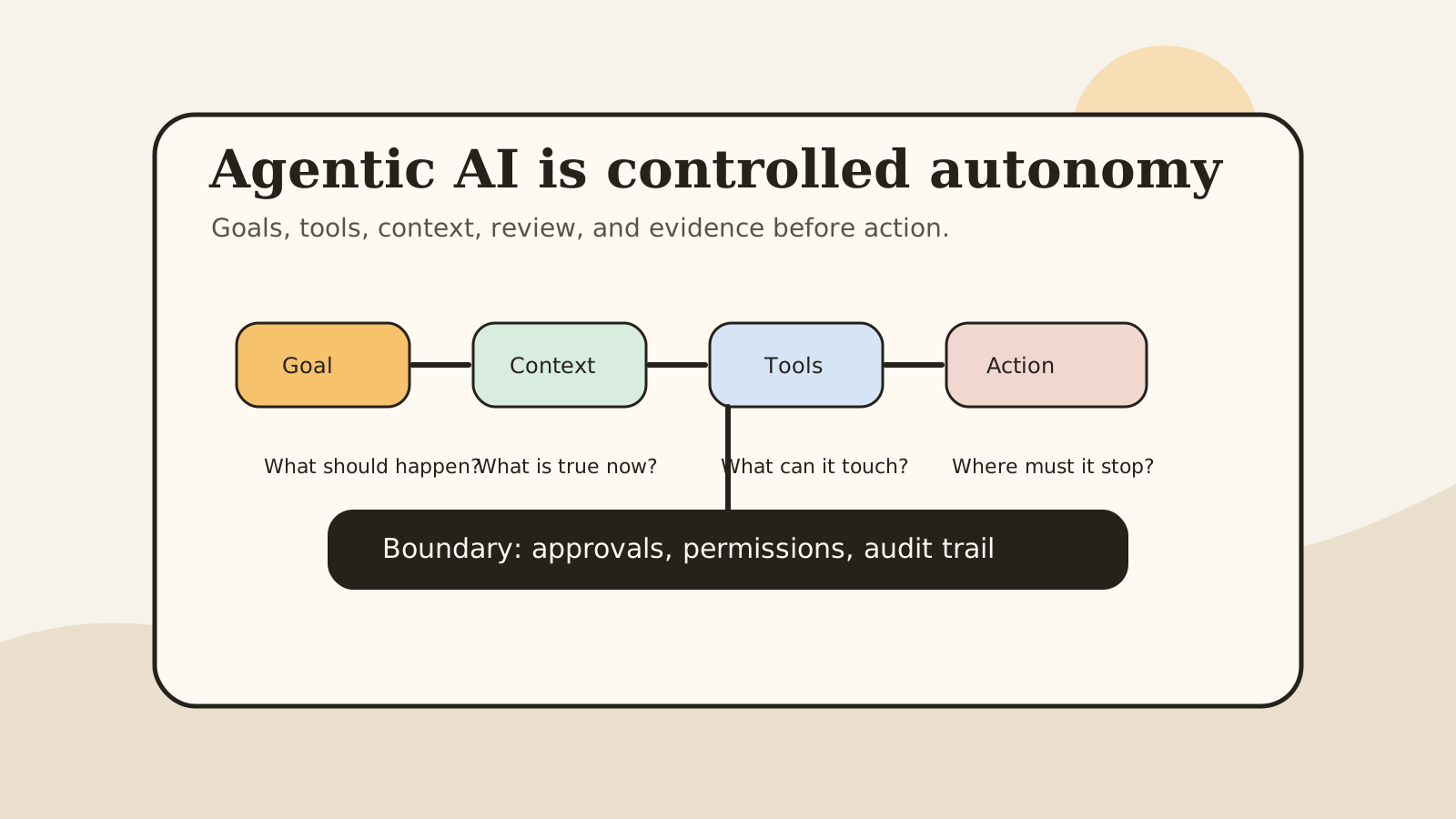
By the end, you should be able to decide where agentic AI can safely run a business loop and where a human must stay in control.
- What agentic AI is, in technical and business terms.
- How the agentic loop works: goal, context, decision, action, check, escalation.
- How to imagine agentic AI in a retail workflow.
- Where agentic AI creates value and where it creates risk.
- What a CEO should ask before approving agentic AI in the business.
Previous post: AI agents vs workflows, which explains why agent ideas should be mapped as workflows before they are delegated to software.
What is agentic AI?
Agentic AI is AI connected to a goal, context, tools, and a feedback loop. It is not just a chatbot. It is not a digital employee. It is software that can move through a defined workflow with limited autonomy.
Technical explanation
A normal AI system usually works like this:
User asks -> AI answers
An agentic AI system works like this:
Goal -> Observe context -> Decide next step -> Use tool -> Check result -> Continue or escalate
That loop is the difference.
The model is still important, but the model is only one part of the system. A useful agentic system also needs instructions, tools, permissions, source context, guardrails, memory, logging, and human handoff. OpenAI's agent-building guidance describes agents as systems that combine models, tools, instructions, guardrails, and handoff paths to complete work (OpenAI, A Practical Guide to Building Agents). Anthropic makes a similar distinction between workflows, where the path is predefined, and agents, where the model has more control over process and tool use (Anthropic, Building Effective Agents).
The simplest technical definition is:
Agentic AI is a model-driven workflow that can reason over context, call tools, take bounded actions, and check whether to continue, stop, or escalate.
Business explanation: imagine a retail workflow
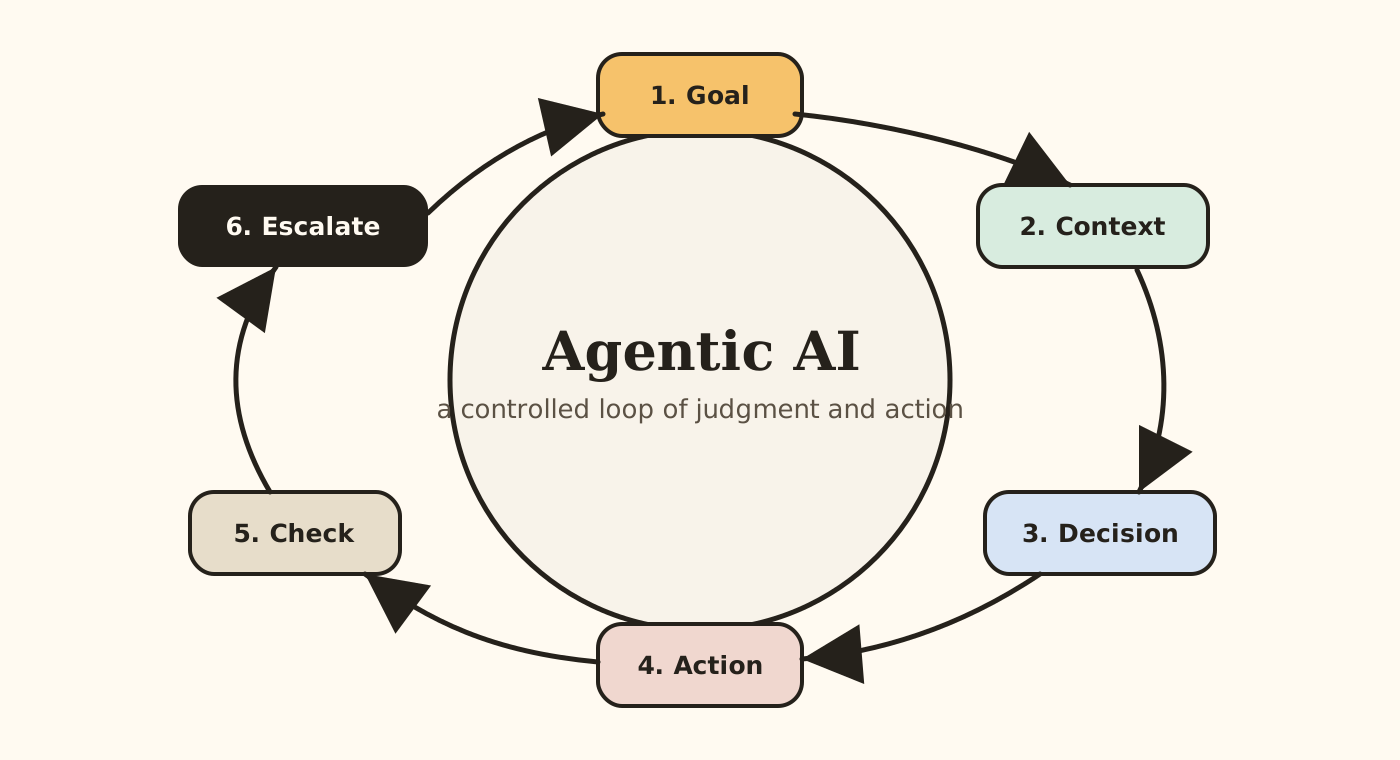
Imagine a retail company with online orders, store inventory, customer support, returns, and delivery partners.
A customer messages support:
"My shoes arrived damaged. Can I get a replacement today?"
A normal chatbot can write a polite answer. Agentic AI can move the workflow forward.
It can read the message, classify the request, check the order, inspect the return policy, look at nearby store inventory, draft a response, and decide whether the case needs human approval.
The CEO-level point is simple: the AI is not "thinking like a person." It is running a business loop.
Customer problem -> Company context -> Allowed action -> Review boundary -> Evidence
If the replacement is low value, policy is clear, and inventory is available, the system may prepare the replacement. If the item is expensive, policy is unclear, customer history is unusual, or inventory is missing, the loop should stop and escalate.
That is agentic AI in business life: software moves repeatable work forward, while humans keep control over exceptions and risk.
The loop is what makes AI agentic
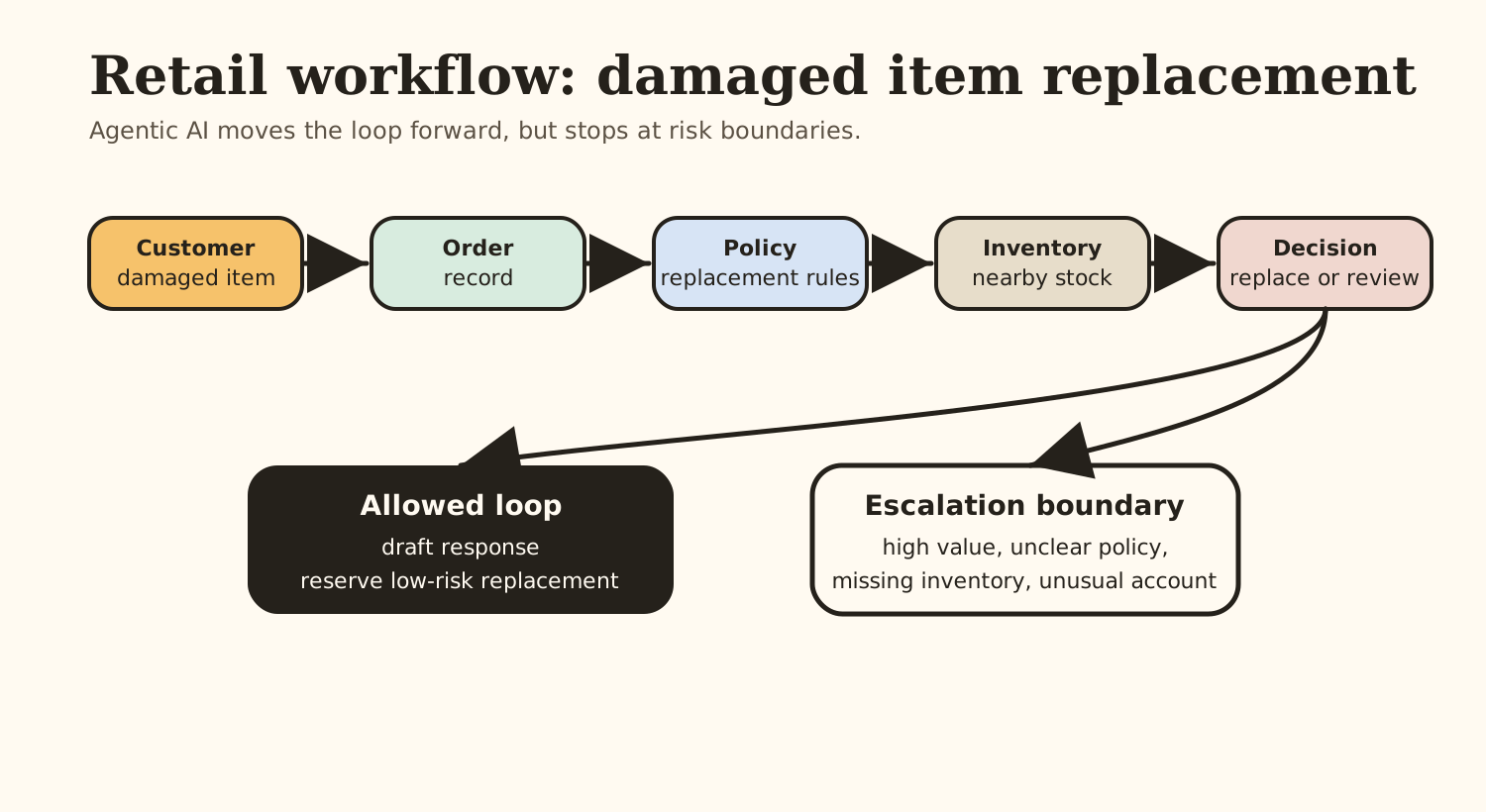
The word "agentic" matters because the system does not only produce an output. It cycles through judgment and action.
There are six parts to the loop:
- Goal: What outcome is the system trying to complete?
- Context: Which policies, records, inventory, customer data, or rules does it need?
- Decision: What is the next safe step?
- Action: Which tool, API, or workflow step should it use?
- Check: Did the action work? Is the result safe? Is anything missing?
- Escalation: Should the system continue, stop, or hand the case to a human?
This is why the loop is more important than the label "agent." A poorly designed loop creates fast mistakes. A well-designed loop creates operating leverage.
For a CEO, the right question is:
Which loop in the business is structured enough for AI to run, and where should the loop stop?
Agentic AI is different from generative AI because it can act
Generative AI creates an output. Agentic AI moves a workflow forward.
That difference changes the management problem.
If generative AI writes a weak email, a person can edit it. If agentic AI sends the email, updates the order, changes the refund status, or reserves inventory, the business needs stronger control.
Think of the difference this way:
Generative AI: "Write the replacement email."
Agentic AI: "Check the order, confirm policy, reserve replacement stock, draft the email, and escalate if approval is required."
The second version can create more value because it removes handoffs. It also creates more risk because it touches systems of record.
That is why agentic AI requires context, permissions, evidence, and review. The more action the system can take, the more the company must define what it is allowed to do.
The CEO value is fewer handoffs, not more autonomy
Agentic AI is valuable when it reduces the number of small handoffs required to complete repeatable work.
In retail, those handoffs are everywhere:
- Support asks operations whether inventory is available.
- Operations asks the store whether the item can be reserved.
- Store staff checks the order.
- Finance checks whether the refund or replacement exceeds a threshold.
- A manager approves exceptions.
- Support replies to the customer.
Agentic AI can compress parts of that chain.
It can collect context, prepare the next action, and escalate only when the workflow crosses a boundary. The value is not "AI acting alone." The value is that humans spend less time gathering context and more time handling exceptions.
The implication for CEOs is not that every workflow should become autonomous. The implication is that agent-like behavior will be embedded in ordinary business software, so leaders need a control model now.
The CEO risk is permission without boundaries
The risk in agentic AI is not that the model sounds confident. The risk is that the system can take action with the wrong context, weak permission rules, or no clear stopping point.
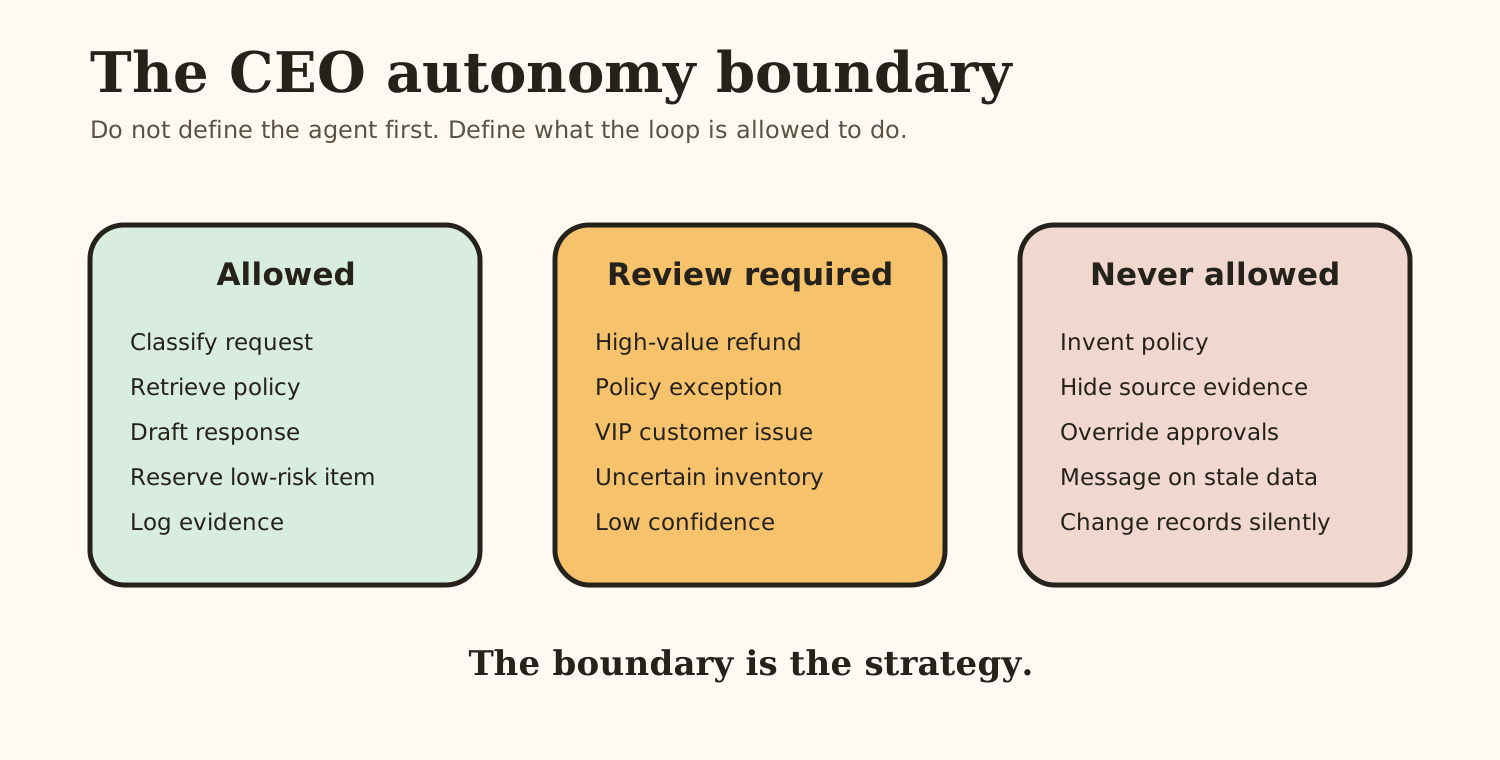
In the retail example, the system should not automatically:
- approve a high-value replacement,
- override policy for a VIP customer,
- message a customer with uncertain inventory,
- update a refund status without a source record,
- or hide the evidence behind the decision.
Those are not model problems. They are operating design problems.
Camunda's 2026 agentic orchestration research frames this as the gap between agentic AI ambition and production reality: companies want agentic AI, but real processes still require orchestration, governance, and control (Camunda, State of Agentic Orchestration and Automation).
The CEO job is to define the boundary before the system acts.
The CEO test before buying agentic AI
Before approving an agentic AI project, ask six questions.
1. Goal: What business outcome should this loop improve?
2. Context: What facts decide the correct action?
3. Tools: Which systems can the AI touch?
4. Boundary: What is it allowed to do without approval?
5. Review: When must a human step in?
6. Evidence: What proof should the system leave behind?
If the team cannot answer those questions, the company is not ready for agentic AI in that workflow. It may still be ready for generative AI, search, summarization, or human-approved drafts. But it is not ready to let software act.
This distinction matters. A CEO does not need to understand every model architecture. But they do need to understand which loop is being automated and where the business remains in control.
What to do today
Pick one retail-style workflow in your business: refund, replacement, invoice exception, support escalation, sales follow-up, inventory alert, or customer onboarding.
Write the loop in six lines:
Goal:
Context:
Decision:
Action:
Check:
Escalation:
Then write two boundaries:
The AI is allowed to:
The AI must never:
Those eight lines are more useful than an agentic AI vendor shortlist. They tell you whether the work is structured enough for agentic AI, what context the system needs, and where the company context audit should begin.
Tomorrow's chapter will explain why AI pilots fail in the real business: the hidden assumptions in demos that break when they meet messy context, approvals, and stale source truth.
If you want help applying this to your company, write the loop above and DM Flow on X with the one action your AI should be allowed to take and the one action it must never take.